Chúc mừng sinh nhật GS. Phan Đình Nhã!


 What's happening: Less than a year after AlphaFold won Google DeepMind a Nobel Prize, the lab has taken the team apart. Most of the original paper's authors have been reassigned over the past year and nearly a quarter have left the company, with the work folded into a wider Gemini push. Research VP Pushmeet Kohli told the FT that a nine-year strategy of attacking grand scientific challenges "has evolved." Nobel laureate John Jumper left for Anthropic in June, followed by two core AlphaFold researchers.
 How this hits reality: AlphaFold did not fail. It cracked a 50-year problem, earned the highest prize in science, and now underpins drug discovery worldwide, and DeepMind broke up the team anyway. That is the tell. One dedicated team solving one real problem is no longer worth what a seat at the Gemini table is worth. Deep science was DeepMind's whole identity, and it just traded that identity for the same language-model race everyone else is running, swapping a proven method for a vaguer promise called the AI scientist.
 Key takeaway: A Nobel Prize is no longer protection inside an AI lab, because solving a real problem now matters less than not falling behind in the race everyone is running.
ET
We are fortunate to live at an incredible moment in history. In the next few years, people will be able to use superintelligence beyond human capacity to create and discover extraordinary new things, build new businesses, express our ideas, learn new concepts, and improve our lives, health, relationships and careers.
The defining question of our age isn’t whether superintelligence will exist, but who will have access to it. Will it be centralized and restricted to a few institutions, or will it be a tool that empowers everyone?
I propose a philosophy based on individual empowerment as the source of prosperity, invention as the primary purpose of superintelligence, and balance of power as the foundation of safety.
It is surprising that the discourse from many of those who are developing artificial intelligence is so filled with doom. I don’t understand why anyone who believes that AI will eliminate most jobs and much of humanity’s relevance would rush to build that future. The notion that AI is so dangerous that the only safe path is an extreme concentration of power seems dangerous. Historically, hoping that an absolute power will benevolently provide for humanity if sufficiently enlightened hasn’t led to safe or positive outcomes.
Humanity has witnessed many transformative advances. Each time there is fear that people will be left behind. But each time humanity has come out with more people sharing greater prosperity, health and freedom. We believe this will be true with AI as well, and the abundance of the future can be shared by everyone. We also believe that the values that got us to this point—liberty, open inquiry, free enterprise and equal opportunity—are also the values to build a positive future.
Putting power in people’s hands to pursue their own aspirations is how humanity has made the most progress. Novel ideas and major steps forward rarely originate from established institutions alone. They came from the brothers in a bicycle shop who believed people could fly, the bookbinder’s apprentice with no schooling who figured out how to generate electricity, and the kid in a garage who thought personal computers could be for everyone. We believe this will continue to be true. As everyone gains more powerful tools, each person will become more capable of shaping the future, not less.
Invention, not automation, will be the greatest contribution of superintelligence. Early AI could answer questions and do routine work. Soon it will increasingly help discover new knowledge—from discovering new drugs to cure a family member’s disease to finding new ways to improve your business. While the number of questions you can ask in a day is limited, the number of valuable things superintelligence can invent to help achieve your goals is unlimited.
As intelligence becomes abundant, the most important question will be how we direct it. Some argue that superintelligence itself, or a small set of experts who control it, should decide what is best for humanity. I disagree. The history of democracy and economics has shown that there is no single objective answer to how people define the best life, and therefore the best approach is letting people decide what matters to them.
Rather than centralizing this power, we believe that delivering personal superintelligence to everyone is the way to answer this question. This has the potential to begin a new era of personal empowerment, in which individuals have greater freedom to pursue their interests and reach their full potential.
Healthy societies also recognize that safety requires checks and balances. If only a handful of institutions have superintelligence, they will inevitably exercise a controlling influence over economics, science and politics. Even with the best intentions, that concentration would limit people’s ability to choose their own future.
As a thought experiment, imagine only one person had a superintelligent lawyer. He would have an unfair advantage in court—even if his position was wrong on the merits. That would lead to a worse society. But now imagine everyone has a superintelligent lawyer. Justice would be carried out much more fairly and efficiently than it is today. When people are empowered, they naturally check and balance each other and the power of larger institutions.
Most societal questions can’t be solved by attempting to align a single benevolent superintelligence. Humanity isn’t a monoculture. There is no technological solution that can align with everyone’s opposing interests and diverse values at once. Any singular superintelligence would have to prioritize some values over others and in the process would be incapable of being benevolent to everyone.
Many risks require serious attention. In most cases, like cybersecurity, the history of open-source software has shown that giving everyone full access to powerful systems will be the best way to protect safety and security over time. For other risks, including biological risks, more coordination between governments and other institutions on responsibly deploying capable models will be helpful.
This applies to the economy and the future of jobs as well. There is a balance between the use of AI as a tool for automation versus as a tool for empowering people to expand their skills and build new businesses. If the balance leans toward automation, the impact on jobs and the economy may be negative.
But if superintelligence is widely distributed, then I believe we will see more jobs in the future, not fewer. It will be significantly easier to start businesses without raising large amounts of capital. I expect the economy will become more entrepreneurial with a greater number of people working at small businesses rather than larger companies.
Developing superintelligence will be the most profound technological advance we will see in our lifetimes. Meta is committed to building with the principles of individual empowerment, invention and balance of power. The arc of human history has bent toward putting more power in people’s hands. If these values lead the way, then I am optimistic that we can build a positive future for everyone.
Mr. Zuckerberg is CEO of Meta.

What's happening: AI has started designing working biology that evolution never produced. A team led by Jennifer Doudna, who won the 2020 Nobel for co-discovering CRISPR, used AI to build a gene-editing enzyme found nowhere in nature, and it cut DNA more cleanly than the natural version. The startup Profluent generated an editor from scratch, open-sourced it as OpenCRISPR-1, and reported roughly 95% fewer off-target cuts than the field's standard tool. Evolution took billions of years on these tools. The models redesigned them in hours.
How this hits reality: This is the same move language models pull on text, aimed at proteins. Feed the model enough examples, let it learn the grammar, then let it write sentences the corpus never held. For decades, biology's best tools were lucky finds. Insulin came from a dog, CRISPR from a yogurt-factory microbe. Now the path runs the other way: start from the function you want, and design the molecule backward. Discovery was a lottery. Design is becoming a workflow, and the models are already beating the incumbent.
Key takeaway: Evolution just picked up its first real competitor, and it iterates in hours instead of eons.
---
OpenCRISPR-1: Generative AI Meets CRISPR
Design of highly functional genome editors by modeling the universe of CRISPR-Cas sequences
2026-07-27
Một cách tình cờ, sáng ngày 27/7/2026, Mẹ Vân nhờ Ba Lợi đi xin thuốc bỏng của bác Bích để chữa vết mụn của Đức. Bác Bích và bác Hùng (chồng bác Bích) ở ngõ 108 Thụy Khuê. Bác Bích là chị ruột của bác Thân vợ bác Bế Trường Thành.
Cũng đã đi qua nhà bác Bích một vài lần rồi - hồi đó là lấy lá làm thuốc bỏng từ Lạng Sơn về nhân dịp tiết Thanh minh đầu tháng Ba âm lịch hàng năm. Những lần đó đi từ nhà bác Thành bác Thân dọc theo đường Xuân Diệu đến Âu Cơ rồi rẽ theo đường Thanh Niên (giữa Hồ Tây và Hồ Trúc Bạch) rồi rẽ vào đường Thụy Khuê một quãng là đến. Lần này thì đi ngược lại: từ Chợ Bưởi xuôi về nên số 108 nằm bên trái đường, gần cuối đường Thụy Khuê. Sáng thứ Hai đường không đông lắm, chỉ mất chưa đến 10 phút (xe máy) là đến nơi. Ngõ 108 rất bé (hình như chiều rộng chỉ khoảng hơn 1 mét), tiêu biểu của phố cổ Hà Nội. Từ ngoài đường Thụy Khuê nhìn vào đã thấy nhà của bác Bích với dòng chữ phía trên cửa:
ĐÔNG NAM
Y sỹ
Nguyễn Thị Bích
Lúc đến thì thấy hai bác đang dùng bữa sáng (lúc đấy cũng khoang hơn 9 giờ sáng). Nói thêm, bác Hùng năm nay (2026) 92 tuổi, bác Bích 82 tuổi. Cuộc sống của 2 vợ chồng già nhàn tản, diễn ra chậm rãi, khoan thai. Trên bàn kê sát tường mỗi bác một bát miến, một ly cà phê đen, một cốc nước cam với một chai nước khoáng. Phía đối diện là một chiếc giường nhỏ, phía trên giường lắp một kệ để một chiếc TV, ở dưới là bộ thu phát video cùng nhiều đĩa CD. Diện tích phòng khoảng chừng 10 mét vuông. Đúng là tiêu biểu của cư dân Hà Nội cổ.
-
Trước khi lấy thuốc mình có dịp trò chuyện, tìm hiểu thêm về gia đình bác Bích. Gốc gia đình bác Bích ở làng Ước Lễ (thuộc xã Tân Ước, huyện Thanh Oai, cách trung tâm Hà Nội khoảng 30km về phía Tây Nam. Nơi đây là cội nguồn của thương hiệu giò chả truyền thống có lịch sử gần 500 năm). Thân sinh chị Bích đã chuyển từ làng Ước Lễ về ở phố Cửa Bắc. Sau năm 1954, gia đình chuyển lên Lạng Sơn. Lý do di chuyển là bởi vì vào thời kỳ đấy ở Lạng Sơn dễ sinh sống hơn. Cụ ông làm nghề thợ may (hợp tác xã), cụ bà buôn bán ở chợ. Ông bà sinh được 6 người con gái: chị Nga đầu, đến chị Hằng, chị Bích, chị Thuần ở Sài Gòn, chị Bình và út là chị Thân. Các cụ đều mất ở Lạng Sơn: cụ bà năm 1976, cụ ông năm 1977. Hiện phần mộ của hai cụ đã được gia đình đưa về Hà Nội.
Bác Hùng - chồng chị Bích - người làng Ngọc Hà - Hà Nội. Bác Bích và bác Hùng xây dựng gia đình năm 1983. Hai bác không có con. Bác Hùng trước đây làm nghề nha khoa, có mở phòng khám và lấy tên là ĐÔNG NAM. Bác Bích có nghề là y sỹ và có bài thuốc dân tộc là thuốc chữa bỏng được chưng cất từ lá cây (lấy từ vùng Lạng Sơn). Hiện nay bác Bích vẫn bán loại thuốc này.


Liên quan đến Mẹ Vân: bác Bích chính là người đỡ đẻ cho Bà Ngoại lúc sinh Mẹ Vân vào năm 1968. Theo lời kể của bác Bích thì vào thời điểm đó Ông Ngoại phải đi công tác nước ngoài - ở Đông Đức cũ. Bác Bích là người thân cận với gia đình Ông Bà Ngoại từ Lạng Sơn.
Source: Terence Tao on AI in mathematics (and beyond)
A curated summary of Terence Tao’s current thinking on AI, with practical guidance and links to source material. Positions are distilled from ~70 Mastodon posts, some sixteen interviews and talks, six long-form essays and lectures, ~55 of his own blog comments, and a direct interview; not everything he has said appears here, by design — omission is editorial. Voice is third person; scope is confined to what is obviously about AI.
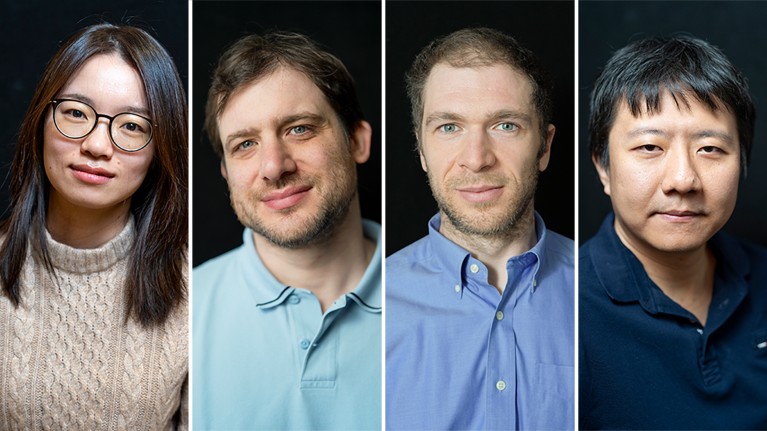
The four Fields Medal recipients are, from left to right, Hong Wang, Jacob Tsimerman, John Pardon and Yu Deng.Credit: Simons Foundation
Source: https://www.nature.com/articles/d41586-026-02169-1
Mathematicians Yu Deng, John Pardon, Jacob Tsimerman and Hong Wang have won the 2026 Fields Medal — one of the most coveted awards in their discipline. Their names were revealed at the International Congress of Mathematicians (ICM) today in Philadelphia, Pennsylvania.
The four winners represent a range of subfields of maths, from number theory to mathematical physics. They had all been rumoured as favourites to win the medal, which is awarded every four years to up to four mathematicians under the age of 40.
The winners all work in North America, but two — Deng and Wang — were born and raised in China. They are only the second and third Chinese nationals to have earned a Fields Medal: Shing-Tung Yau, who is now at Tsinghua University in Beijing, won his in 1982, before either Deng or Wang were born. Wang is also only the third woman to win in the award’s 90-year history, after the late Maryam Mirzakhani in 2014 and Maryna Viazovska in 2022.
---
2026 Fields Medals Awarded to Four of World’s Top Mathematicians
By Yen Duong and Thomas Sumner
The award, nicknamed the Nobel Prize of mathematics, recognizes outstanding achievement — and the promise of future achievement — by mathematicians under 40.
During today’s opening ceremony at the International Congress of Mathematicians (ICM) in Philadelphia, the International Mathematical Union (IMU) announced the recipients of the 2026 Fields Medals.
This year’s prizes went to four of the world’s top mathematicians: Chinese mathematician Yu Deng of the University of Chicago; American mathematician John Pardon of Stony Brook University in New York; Canadian mathematician Jacob Tsimerman of the University of Toronto; and Chinese mathematician Hong Wang of New York University and France’s Institut des Hautes Études Scientifiques (IHES).
The Fields Medal is often described as the Nobel Prize of mathematics due to its prestige. Awarded every four years to two to four mathematicians under the age of 40, the medal recognizes outstanding mathematical achievement in existing work and the promise of future achievement.
Each winner receives 15,000 Canadian dollars (approximately $10,600) and a gold medal bearing the visage of the Greek mathematician Archimedes.
“The four medalists exemplify the depth, originality and vitality of contemporary mathematics, and we are delighted to celebrate their achievements at the International Congress of Mathematicians,” says Hiraku Nakajima, president of the IMU.
Additional Prizes Awarded
During the ceremony, the IMU also announced the winners of other top prizes in mathematics. Full citations for these prizes are available on the IMU website.
Shayan Oveis Gharan of the University of Washington received the Abacus Medal for mathematical contributions to computer science. Oveis Gharan is a Simons Investigator in Theoretical Computer Science.
Graeme Segal of the University of Oxford won the Chern Medal for outstanding lifetime achievement in mathematics.
The Carl Friedrich Gauss Prize was awarded to Yurii Nesterov of Belgium’s University of Louvain for mathematical contributions with significant applied applications.
Hannah Fry of the University of Cambridge was honored with the Leelavati Prize for public outreach.
---
---
Ba trong 4 gương mặt thắng giải Fields 2026 từng giành huy chương vàng Toán, Tin quốc tế, hai người lớn lên ở Trung Quốc - là lần đầu tiên trong lịch sử.
Giải thưởng Fields năm 2026 - được coi như giải Nobel của giới Toán học, được công bố tại Đại hội Toán học Thế giới (ICM) tối 23/7. Bốn người được xướng tên là Yu Deng, Jacob Tsinerman, John Pardon và Hong Wang.
Đây là lần đầu tiên hai người gốc Hoa đoạt giải Fields cùng lúc, cũng là lần thứ ba một nhà toán học nữ được vinh danh. Tất cả đang làm việc ở Bắc Mỹ.
Yu Deng, 37 tuổi, là giáo sư Đại học Chicago, Mỹ, được xướng tên đầu tiên. Anh có những đóng góp trong lĩnh vực phương trình vi phân đạo hàm riêng, bao gồm việc suy luận chặt chẽ phương trình Boltzmann từ động lực học cầu cứng cho khí loãng, sự suy luận phương trình động lực sóng từ các hệ tán sắc phi tuyến, và các phương pháp tiếp cận xác suất đối với động lực học Schrödinger phi tuyến.
Thời phổ thông, Deng được tuyển thẳng vào Đại học Bắc Kinh với huy chương vàng Olympic Toán quốc tế (IMO 2006). Anh sau đó tới Mỹ lấy bằng cử nhân ở MIT và bằng tiến sĩ ở Đại học Princeton.
John Pardon sinh năm 1989, giáo sư Đại học Stony Brook, Mỹ, được vinh danh vì thành tựu trong lĩnh vực hình học symplectic, bao gồm các phương pháp tiếp cận mới đối với các chu trình cơ bản ảo, phạm trù Fukaya của một số đa tạp nhất định và việc đếm các đường cong chỉnh hình. Anh cũng đóng góp cho các lĩnh vực khác của hình học và tô pô, bao gồm tác động nhóm trên đa dạng 3 chiều và lý thuyết nút.
John Pardon từng giành huy chương vàng Olympic Tin học quốc tế từ năm 2005 đến 2007. Anh tốt nghiệp thủ khoa Đại học Stony Brook, nhận bằng tiến sĩ ở Đại học Stanford.
Jacob Tsimerman sinh năm 1988, giáo sư Đại học Toronto, là người Canada đầu tiên đoạt giải Fields.
Anh có đóng góp trong tái định hình tính tối thiểu-o (o-minimality) thành một phương pháp cơ bản của hình học đại số phức và số học, cùng vai trò trong việc chứng minh nhiều giả thuyết trọng tâm, bao gồm giả thuyết Griffiths về tính đại số của ảnh thuộc ánh xạ chu kỳ, và giả thuyết André-Oort đối với các đa dạng mô-đun Siegel.
Tsinerman từng hai năm liên tiếp giành huy chương vàng IMO. Anh học toán tại Đại học Toronto, tiến sĩ ở Đại học Princeton, Mỹ.
Hong Wang trẻ nhất trong số 4 người thắng giải. Cô sinh năm 1991, là giáo sư Đại học New York, Mỹ.
Cô được trao tặng huy chương Fields 2026 cho những nghiên cứu trong lĩnh vực giải tích điều hòa và lý thuyết độ đo hình học, bao gồm các ứng dụng của kỹ thuật đa tỷ lệ và tách lớp vào giả thuyết làm mịn cục bộ cho phương trình sóng phẳng. Cô cũng có đóng góp những tiến bộ lớn trong bài toán hạn chế Fourier, các tập khoảng cách Falconer, các tập Furstenberg trên mặt phẳng và bài toán Kakeya trong không gian ba chiều.
Nữ chủ nhân thứ ba trong lịch sử của giải Fields được coi là "thần đồng" khi đỗ Đại học Bắc Kinh (Trung Quốc) năm 16 tuổi. Cô tốt nghiệp cử nhân trong nước, làm tiến sĩ ở MIT, Mỹ.
Fields dành cho tối đa 4 nhà toán học dưới 40 tuổi, được trao 4 năm một lần. Người đoạt giải nhận một huy chương bằng vàng 14 carat có khắc hình Archimedes và khoản tiền thưởng 15.000 CAD (khoảng 270 triệu đồng).
 (Chú giải: Đoạn này người dẫn chuyện dựa trên một câu chuyện có thật của sự tưởng tượng – xem Ảnh 1.)


